Mao’s Success in a Hostile World
- Three Bad Years in Twenty-Eight Years of Achievement
- Hating The ‘Not Invented Here’
- Mao’s Invisible Victims
- Did Millions of Britons Die When Thatcher Ruled?
- A Side Issue – Limits of AI Research Assistants
- Mao’s Responsibility
- China Better Off Without Mao?
- Why the USA Resented Mao’s Success
- Bad Weather Confirmed from Western Sources
- Bold Policies Justified?
- Moderate Socialism Secure on Maoist Foundations
- Wider Reading
Three Bad Years in Twenty-Eight Years of Achievement
Mao’s Great Leap Forward was a grand success in its first year, 1958. And then ran into trouble with a mix of severe weather and false reporting in 1959. The severe weather and over-bold policies continued into 1960 and 1961.
There was no actual starvation. But stress and shortages did raise the death rate.
Return it for three years to a level that had been normal for China, even in years without major wars in the years since the First Opium War. And it’s likely that China before the Opium Wars also had the same high death-rate. Something that was found everywhere before modern medicine and sanitation were achieved in a few countries.
The Chinese authorities correctly call it the Three Bad Years. Years in which there were many foreign reporters from non-Communist countries who saw shortages rather than famine. This included Japanese who could read Chinese ideograms, a modernised version of the ancient system known to all educated Japanese.
The setbacks after the first successful year of the Great Leap Forward included errors by Mao, certainly. But bad enough to discredit his work as a whole?
Anyone’s reputation can be trashed, if you look just at their errors. If you never ask whether there were runs of success more than outweigh the mistakes.
Winston Churchill was very strongly blamed for the Gallipoli landings in World War One. He was guilty as a policy-maker but escaped blame for the British venture into Norway in 1940, since Chamberlain was still Prime Minister. Was guilty but not blamed until recently for allowing a massive famine in British-ruled Bengal. And is often blamed along with President Roosevelt for failing to divert a small part of the bombing campaign against Germany to attack the railway lines being used to ship vast numbers of Jews to the extermination camps in German-occupied Poland. Yet almost everyone sees his stand against Hitler as vastly outweighing all this. A quite different world would have resulted if another man had been Tory leader and begged Hitler for a moderate peace after the Fall of France. Documents released since indicate that Hitler would have been ready to settle for much less than an invasion of Britain. Seemed ready to accept much less than most Tories were thinking they’d have to give. (https://labouraffairsmagazine.com/m-articles-by-topic/44-fascism-and-world-war-2/how-hitler-might-have-had-a-victorious-peace/)
Chinese see Mao’s achievements as far more important than his mistakes. A quarter of a century of Western authorities telling them that they’re wrong has simply diminished the standing of those ‘authorities’. Undermined the credibility of those Chinese who bow to that authority. Once-hyped dissident An Weiwei has recently embarrassed his Western fans by managing to make himself tolerable again for Beijing.
Under Deng, there was an effort to lower Mao’s standing in Chinese history, but he remained honoured. He appeared on the most valuable Chinese banknote in 1988, but sharing the honour with Zhou Enlai, Zhu De, and his sometimes supporter but Cultural-Revolution enemy Liu Shaoqi. But even under Jiang Zemin, he was upgraded to be the only leader appearing and being on all denominations of banknote in a new 1999 issue.
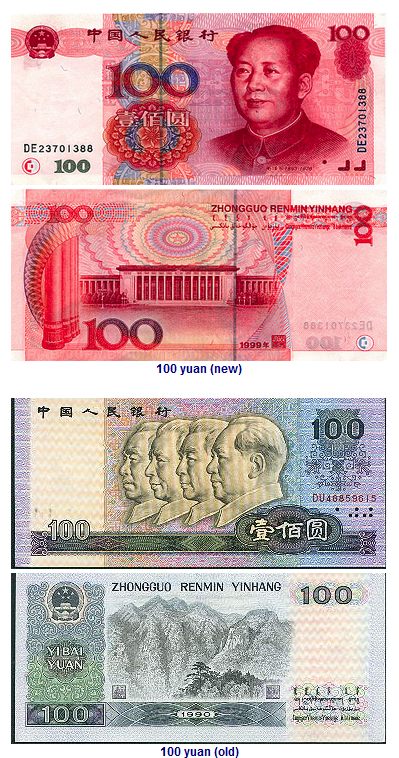
Mao’s status rose further when the party chose Hu Jintao their next leader. Then Bo Xilai tried a high-profile ‘neo-Maoist’ political style, and looked briefly like a real alternative to Xi Jinping. Bo was crushed, and may have been insincere. His deputy fled to a US U.S. consulate in Chengdu, claiming high-level corruption. His removal came later, and the Wiki suggests that party elders had to be consulted on the matter (https://en.wikipedia.org/wiki/Bo_Xilai#Removal_from_posts). Something I had noticed at the time, though I think I failed to say so in my Newsnotes. But in any case, I was gratified to find that Chinese politics did move in reaction to his brief success. Xi has not only ruled more like Mao did, but confirmed Mao’s status by having it officially noting that China had made big advances between 1949 and 1976
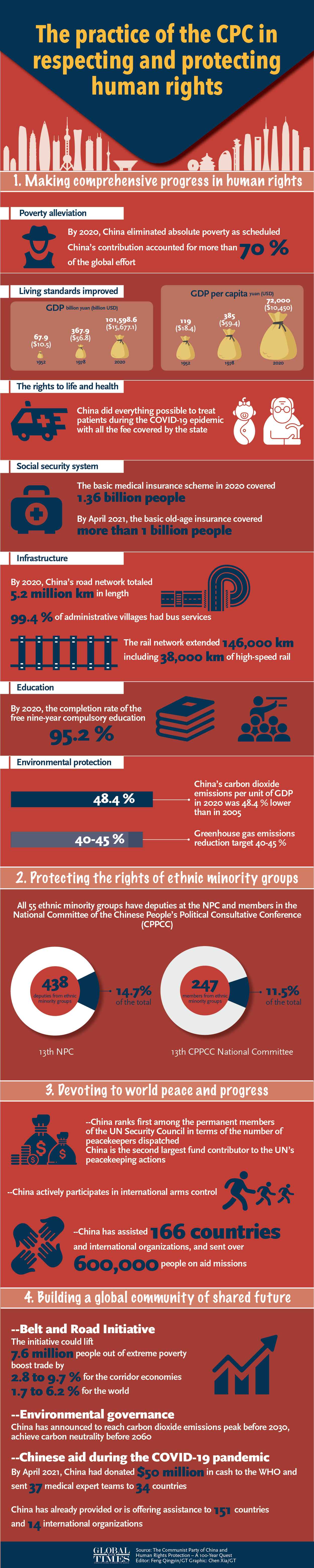
It gets insinuated that China without Communists might have done better. But this ignores the amazingly bad political and economic performance by the Kuomintang between 1945 and 1949. They were quickly rated as worse than the Japanese by ordinary citizens in Taiwan and in the former puppet state of Manchuria. And lost credibility in the rest of China with massive inflation that Kuomintang officials mostly used for personal gain.
And this growing failure incidentally revived the idea of an independent Tibet, which had been abandoned in 1940 by the dominant factions in Lhasa, a much less holy place than outsiders generally imagine. The current Dalai Lama had an elder brother who was a senior cleric, and had been selected over rival candidates by the support of the Central Government and the USA.
Mao gained acceptance in 1949, because other options had visibly failed. And from then till 1959, he had a grand run of success.
One that made him over-confident, but that’s a common failing for any dynamic leaders.
Lives shortened in 1959 to 1961 would probably have ended rather sooner without Mao’s intense radicalism and successful reforms between 1949 and 1958. The Republic of India greatly improved on British-elite rule over the same period. But looking at the entire 28 calendar years of Mao’s rule, India was less successful both economically and in terms of extending human lives.
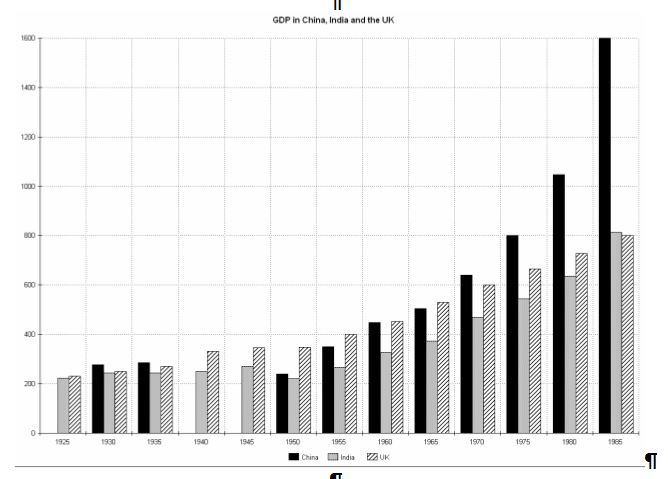
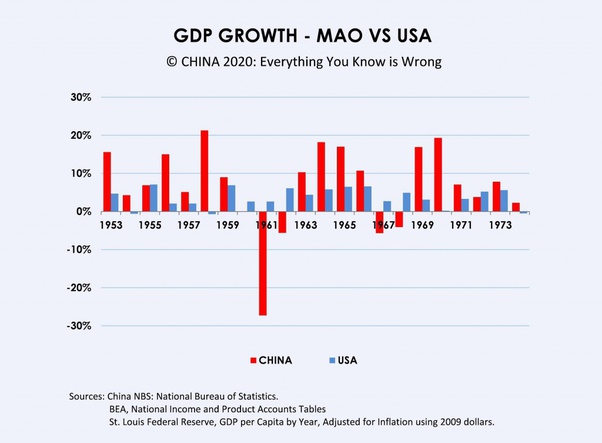
Mao’s China also had better economic growth over those 28 years than either the USA or Britain. Not the spectacular growth of Japan or West Germany, indeed, but those were helped by the USA wanting to show non-Communist success at a time when Global Communism scared them into looking after ordinary people rather than catering to the rich.
Claims that multimillionaires were over-taxed and over-regulated began in the 1980s, when the Soviet Union lost its attractiveness to ordinary Westerners. At a time when China under Deng was widely seen as having surrendered to capitalism.
Things got worse after the Soviet collapse, when the West ignored the few wise voices that urged the same sort of forgiveness and generous aid that had made dependable friends of former enemies in West Germany, Italy, Japan, and the former collaborators with Imperial Japan in South Korea. There were the same voices wanting revenge, but in the 1940s and 1950s these were outweighed by a selfish British and US desire not to lose the Cold War.
After the 1989-91 collapse in Moscow’s power, Western leaders thought they were being smart by being harsh about with Russia had left. And then treating Putin as an aberration when he objected. (https://drpatwalsh.com/2022/10/11/putin-the-reluctant-annexationist/.)
For China, the leaders thought it inevitable that a rising middle class in China would start to behave like the rising middle class had in the USA and Western Europe. Ignoring that similar elements had existed for many centuries in Imperial China, and had never shown any interest in Western notions of a nominally loyal opposition that could fight whatever the current government might be doing. The desire was for Good Government: Chiang Kai-shek was discarded when he failed to provide it for Mainland China.
As a Briton, I have no wish to see Chinese-style politics applied here. I’m not wanting to see regular executions of rapists and minor drug offenders, though it cannot be denied that these policies have limited drug abuse and made women in China safe when they walk alone at night. But the left in Europe and the USA is missing a grand opportunity to point out that China is being hugely successful precisely because it was sensible about Mao’s legacy.
Hating The ‘Not Invented Here’
The left has been plagued by what’s generally called sectarianism. People with similar beliefs may spend more time fighting each other than fighting their official foes.
It seems to me that sectarianism is the wrong word. People claiming a special religious authority from an all-powerful God and/or a uniquely wise teacher can’t readily say that an alternative is just as good. But on secular matters there should not be the same problem.
Should not be, but we are fallible thinkers. And outside of religion, it is normally known as Not Invented Here
“Not Invented Here (NIH) is … corporate or social bias that leads individuals and organizations to reject or undervalue external ideas, products, or research, favoring instead to build their own, even when better, cheaper, or more efficient solutions already exist. It is essentially a cultural preference for in-house development due to pride, fear of change, or a desire for control.” (AI Overview)
“Businesses: A company refuses to use third-party software and insists on building its own—even if it’s slower or more expensive.
“Engineering teams: Developers ignore open-source libraries and reinvent tools from scratch.
“Research & academia: Scholars dismiss findings from outside institutions.
“Government or national policy: Preference for domestic solutions over foreign ones…
“The opposite of NIH is a ‘best idea wins’ culture—where solutions are judged on merit, no matter where they come from.” (ChatGPT)
“In short, ‘not invented here’ is a prejudicial bias against external ideas that can stifle innovation, waste resources, and lead to an organization falling behind its more open-minded competitors.” (DeepSeek)
There has always been a lot of ‘Not Invented Here’ among radicals. But it was one of many things that got much nastier after the rival European empires chose to engage in a war without compromise until one side collapsed. Socialists in the various European powers mostly went along with the war, ignoring earlier ideas of a General Strike to prevent war, an idea that now seems impossible. But the idea seemed feasible to Jack London in his dystopian novel The Iron Heel. And it was in reaction to this that Lenin formed a World Communism that was intended to have a single global leadership directing the parties in each existing sovereign state.
That idea has now run its course. But ‘Not Invented Here’ remains strong, with socialists mostly refusing to admit that the Soviet Union scared the ruling class for as long as it flourished, giving socialists great advantages. Letting them argue that this would prevent revolution, at a time when this seemed feasible in many countries where the left has now lost popularity. Many, and notable George Orwell and his admirers, seem keen to call the Soviet experience the worst thing possible.
And likewise for China. Rather than cite its post-Mao experience as an example of what Gorbachev and Yeltsin should have done, it is denounced for maintaining its highly successful Democratic Dictatorship. A one-party state that does not allow significant competitors, but one which has been incredibly good at delivering what most Chinese actually want. But most moderate leftists are keen to say ‘nothing like what we want’. And even though Mao’s China had many moderate leftists admirers when it was there for people to visit and be impressed by, today’s equivalents seldom challenge the New Right
In my view, the New Right and the centre-left capitulationists like Blair and Clinton are clever schemers but not deep thinkers. Short-term in their outlook. People very clever at working the system for their own advancement, but confused and misled on how the system works.
It should have been obvious that after Beijing survived the crisis of 1989, the same system would flourish for many more years. In fact it was obvious for me and I said it, though with a mistaken notion that success for the protest would have been a good thing. (https://labouraffairsmagazine.com/very-old-issues-images/magazine-001-to-010/magazine-012/what-tiananmen-1989-was-really-about/.) But most of them including most of the left have spent the next 35 years predicting that next year was going to be the year this obnoxious ‘Not Invented Here’
Within their own domain, surely someone should have realised that Epstein was poison for the causes he was serving. That even if they personally saw nothing wrong with 14-year-old females being lured into sexual acts with the gift of a luxury life-style, the Western public was going to react strongly. See everything touched by Epstein as now unacceptable, even though I don’t suppose all of them are guilty. (And deny any knowledge or competence when it comes to saying who was who.) It should have
They had the example of the Roman Catholic Hierarchy losing an enormous amount of its authority on a similar issue. But I doubt that their ‘thinkers’ would see the connection even now. And probably use all their genuine talents to vehemently deny it, if it should now be suggested to them.
The Populist Right is now replacing the New Right and the Capitulationist Centre-Left. The more serious left remain open to a widespread belief by voters that their nice ideas will be too expensive, or just not work.
While most of the left cripples itself with ‘Not Invented Here’, their position is weak. And the alternative has mostly been a Populist Right that is quite content to drop hostility to Russia and China. And a better view of Chinese reality would be a crucial step towards recovery.
Mao’s Invisible Victims
It has become an article of faith among Westerners that Mao wantonly starved tens of millions who had foolishly trusted him. But they never ask ‘where are the photographs of the famine victim?’.
Almost every confirmed famine within the era of photography has numerous tragic photos of the pitiable victims. But for Mao’s China? Not one.
Foreign journalists moved freely within most of China in the years 1959 to 1961, as they had ever since their governments recognised People’s China as a valid new state. Only US reporters were missing, with their government refusing recognition. Us power and bullying also keeping China out of the UN until 1971. (https://en.wikipedia.org/wiki/China_and_the_United_Nations.)
And they reported nothing worse than strict rationing. And some would also mention that the officials looked as if they were sharing the general food shortage, which was definitely not the case in the genuine famines that had happened in pre-Communist China.
There were no extra deaths because of the entirety of Mao’s rule: the 28 calendar months from 1949 to 1976. On the contrary, the vast majority had longer lives than they’d have had if the Kuomintang had somehow become as efficient as the government of the Republic of India. India improved its own death rate, but I’ll detail later how being a pluralist multi-party system may have cost their population about 4 extra deaths per thousand. Tens of millions across the years, even if you accept the worse estimates of the cost of Mao’s errors with the Great Leap Forward. I found a useful diagram in a book on the matter:
SPIKE DEATHS DIAGRAM
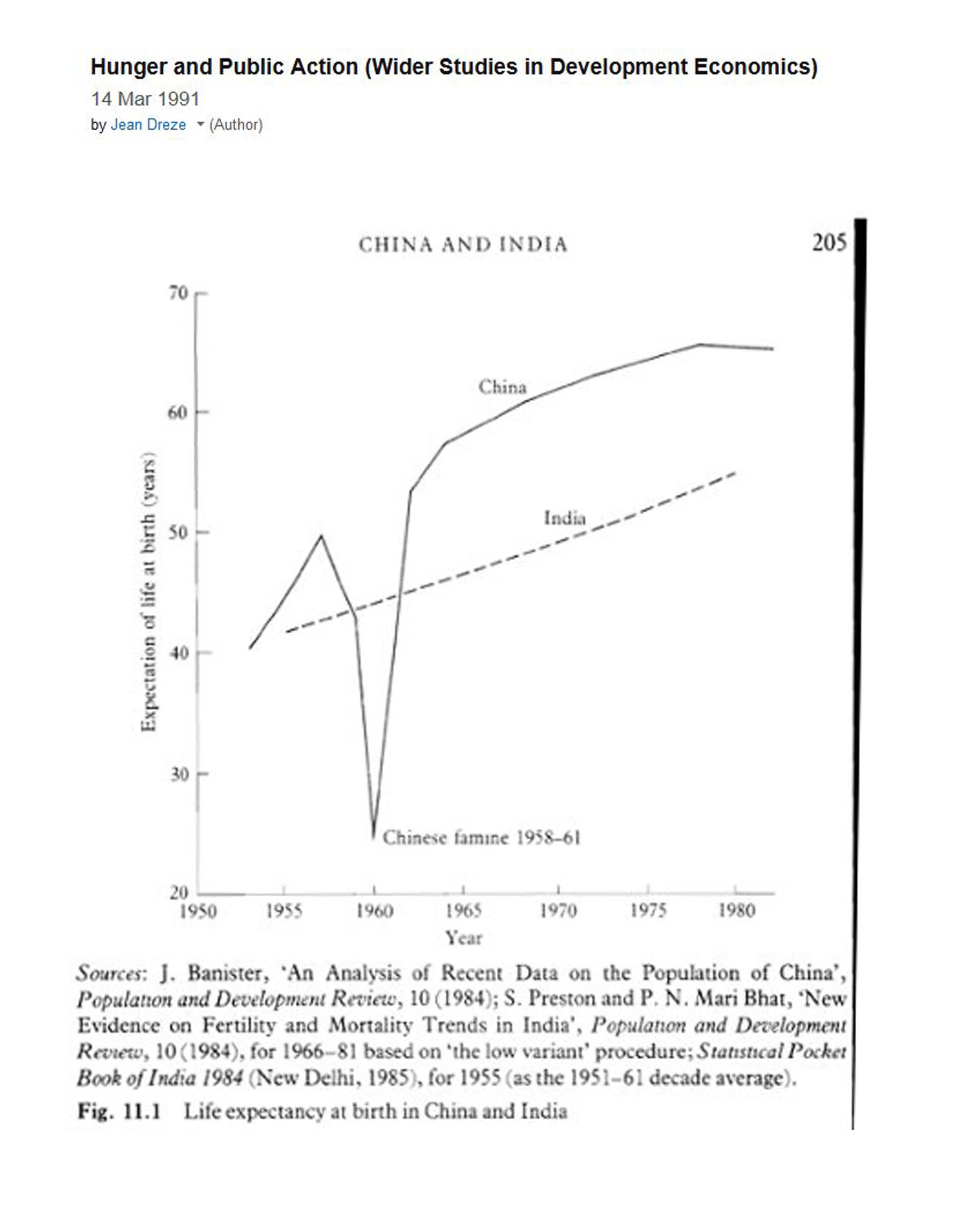
I also made by own calculations, based on Angus Maddison’s grand work on historic statistics, which is generally accepted as the best. Excess deaths compared to 1955 to 1957 ranged between 14 million and 24 million – far less than the tens of millions commonly cited. I give details later on. And this tragic error must be set against the extra tens of millions of deaths that might have been expected if China had improbably become what the Republic of India became in the same period. Indians ruled by Indians had much longer lives than when well-paid experts from Upper London kept Indians in a much less powerful position than they had imposed on ordinary Britons.
Note that I as an ordinary Briton will not accept responsibility for the way Upper London squeezed the Rulership Empire: the countries where what Britain defined as the White Race were a tiny minority and expected to remain so. I will accept responsibility for ordinary Britons mostly ignoring the displaced people of the Settlement Empire, though my parents and siblings were always anti-racists. I coined the phrase Upper London just to make it clear how confusing it is to say ‘Britain did X’, as if we were a democratic collective. Britain didn’t give the vote to a majority of men living in Britain until the 1880s (https://labouraffairsmagazine.com/m-articles-by-topic/40-britain/665-2/). Non-whites were not excluded within the British Isles, but that was probably because they were few. The same Britons moved elsewhere were mostly easy converts to racism.
Most Britons now accept multiracialism, and those who think about the matter will generally agree that we imported a great deal. Our religion is Judaism heavily rewritten by lower-class and mostly uneducated Greeks. Our astronomy is Babylonian, again rewritten by Greeks, but very learned Greeks. Greeks in small separate and originally monarchical kingdoms also seem to have learned about democracy and republican rule from the Phoenicians. It was older and more widespread than the better-known Greek examples, with Classical Romans clear enough that Carthage was a semi-democratic Republic very similar to Rome in its politics, but also an older republic. (https://mrgwydionmwilliams.quora.com/Rome-s-Undemocratic-Republic).
Beliefs that Westerners are the inventors and upholders of democracy are simply wrong. One of many errors: pranking pollsters in the USA have fun getting their undereducated public to disapprove of ‘Arabic numerals’, the only system we now use, but it’s worth adding that Hindus invented it. But Muslims who were mostly Arabic-speaking added a lot to the Greek learning that was the basis for the European Enlightenment. And separately, the example of China as a high culture with no organised church was a major influence on the European Enlightenment. When the papacy made the Jesuits abandon their successful mission in Imperial China, there was a legitimate question about who was converting who. And the disrupted Chinese idea of morality independent of priests spread easily, with China in the 18th century looking like a model to copy
With Communist China from the 1980s, the British left have been successfully fooled by their foes. The false belief that Mao was monstrous is part of the reason that most Western leftists won’t hold up China as an example of successful socialism. That, and an equally false belief that Mao’s policies kept China poor, and then Deng had to allow capitalism and exploitation to make them rich.
I also suspect that some of them are fuelled by a sectarian anger that Mao’s creation flourishes while the Soviet Union fell apart. Or the lost ideal may be Tito’s Yugoslavia, and simple nostalgia for both I’d accept as positive. Both had interesting possibilities. But I’ll accept this, only for as long as disappointment does not lead to jealous hatred of those who proved more successful.
There are also Trotskyists, who always show a jealous hatred of everyone, including rival Trotskyists. (https://mrgwydionmwilliams.quora.com/Trotskyism-a-Century-of-Failures.) They have never yet been considered a real revolutionary threat in any place except the Soviet Union itself. And within the politics of Soviet Communism, their refusal to accept a lesser role as a Loyal Opposition provoked the purges that did so much long-term damage.
In China, it is worth quoting the views of Lu Xun. He was a gifted writer who would have been at home in a genuinely Westernised China, had this emerged. The sort of China that Sun Yat-sen was aiming at, but which Chiang Kai-shek betrayed because he feared to fight Western Imperialism when a Communist-led revolt gave him control of Shanghai.
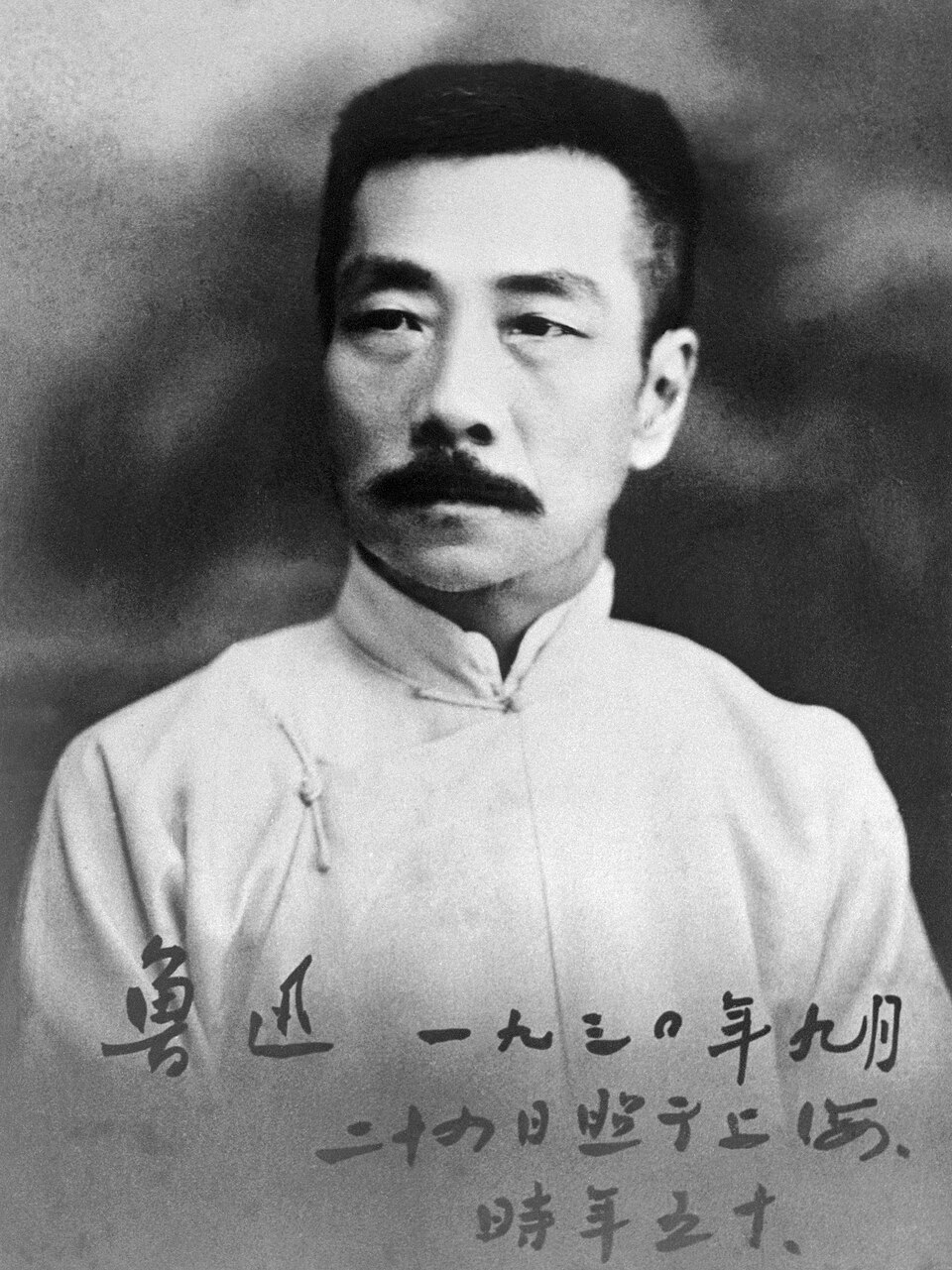
Stranded by history, Lu Xun recognised that Mao and the global movement led by Stalin were the only people who might move China in a direction he saw as positive. It was what people in the USA sometimes call ‘‘The Only Game in Town’. So he spoke against the Trotskyists, who for the previous decade had been claiming to be the real centre for World Revolution:
“You consider Stalin and his colleagues bureaucrats, and the proposal of Mao Tsetung and others — ‘Let all parties unite to resist Japan’ — as a betrayal of the cause of revolution.
“I certainly find this ‘confusing’. For do not all the successes of Stalin’s Union of Soviet Socialist Republics show the pitifulness of Trotsky’s exile, wanderings and failure which ‘forced’ him in his old age to take money from the enemy? His conditions as an exile now must be rather different from conditions in Siberia before the revolution, for at that time I doubt if anyone so much as offered the prisoners a piece of bread. He may not feel so good, though, because now the Soviet Union has triumphed. Facts are stronger than rhetoric; and no one expected such pitiless irony. Your ‘theory’ is certainly much loftier than that of Mao Tsetung; yours is high in the sky, while his is down-to-earth. But admirable as is such loftiness, it will unfortunately be just the thing welcomed by the Japanese aggressors. Hence I fear that it will drop down from the sky, and when it does it may land on the filthiest place on earth. Since the Japanese welcome your lofty theories, I cannot help feeling concern for you when I see your well-printed publications. If someone deliberately spreads a malicious rumour to discredit you, accusing you of accepting money for these publications from the Japanese, how are you to clear yourselves? I say this not to retaliate because some of you formerly joined certain others to accuse me of accepting Russian roubles. No, I would not stoop so low, and I do not believe that you could stoop so low as to take money from the Japanese to attack the proposal of Mao Tsetung and others to unite against Japan. No, this you could not do. But I want to warn you that your lofty theory will not be welcomed by the Chinese people, and that your behaviour runs counter to present-day Chinese people’s standards of morality.” (https://www.marxists.org/archive/lu-xun/1936/06/09.htm.)
Ninety years on, Trotskyists have fragmented into several movements with exactly the same claims, and the same complete lack of success. Their rise in the West has coincided with decline for the left in general.
China was fortunate in that its Trotskyists shared the mistrust of peasants spoken by the man himself. A view Trotsky perhaps held, because as Lev Bronstein came from an exceptional family of successful Jewish farmers. Radical writer Lu Xun, famous in the west for his ironic The True Story of Ah Q, admired many of Trotsky’s ideas. But for China’s future, he put his trust in Mao.
Lu Xun perhaps realised that it was easier to mock Ah Q than to transform real-life wretches like Ah Q into serious and valiant revolutionary soldiers. Mao managed this, starting with a hard core of workers and radical intellectuals, but able to take in both captured enemy soldiers and the marginal among the Chinese peasantry. Able to make them soldiers who would not rape or steal as most Chinese soldiers did in that era: he was able to transform them into Red Warriors.
Years back, Irish radical Brendan Clifford gave us a useful insight into the sudden rise of the IRA – something that later generations take for granted, not realising how odd it seemed at the time. He made a botanic analogy. A seed is not a large body of living matter: it is a very special body with the ability to take in and organise a large mass of inert matter into more of the same organism.
Plants manage it, thanks to tens of millions of years of Natural Selection. Plants that make successful seeds had ancestors that got better and better at making seeds. Surviving more often in a tough environment. You get the appearance of wisdom from what a plant does, but in reality it is all mindless.
Organising self-willed humans into a coherent army or a coherent society is much easier said than done. It certainly needs a large dose of the authoritarian attitudes that left-wing intellectuals in societies that were made safe for their kind by authoritarian attitudes in earlier centuries.
In this article, my task is to show that most of the standard beliefs about Mao are nonsense. And ridiculous nonsense: before the 1980s, there were plenty of popular Western books that were much more positive. What we get now is part of the general blight the New Right has put on our culture.
I’ll also add that China is genuinely much more authoritarian on some matters than the West. As I mentioned earlier, China regularly executes rapists, for instance. But the Western media has been dominated by the rich, so the nominal principles get ignored. Demanding human rights for rapists would not be a nice anti-China sound-bite, so the topic gets evaded.
Many off-message facts get evaded in the new ‘post-truthful’ era. For instance I was unaware that China had decriminalized homosexuality until I noticed that gay rights were not mentioned in long denunciation of China by gay leftist Peter Tatchell. Was the poor man ill? No, it had been legal – more accurately decriminalised – since 1997. No reason for Tatchell to mention it years afterwards, but why had it been left obscure in Western media?
I did a quick check and decided I might have picked it up from the South China Morning Post if I’d been following it at the time. But that otherwise the general public with no particular interest in gay matters would be unaware. May still be unaware.
One of many ways in which media owned by the super-rich can encourage false beliefs without telling any specific lie. Omit some things, and misled on others. And keep quiet on some issues, such as the ignorant hostility to Chinese living in the West during the Covid crisis. Westerners returning from infected areas in China and beyond would be the obvious source, but who publicised that? Was there anyone who said that attacks on Chinese who had not been in China recently was monstrous stupidity.
1960s radicalism was broadly successful, but frequently dishonest. This foolish cheating spread to everyone as the Baby Boomers moved into positions of power. There was a growth in what some of us call Post-Truthful ideas: a notion that reality is whatever you want it to be. A pattern of distortion, but false beliefs about the actual consequences of Mao’s rule are much the worst.
Did Millions of Britons Die When Thatcher Ruled?
There is a 1954 book called How to Lie with Statistics. Amazon Books describes it neatly:
“In 1954, Darrell Huff decided enough was enough. Fed up with politicians, advertisers and journalists using statistics to sensationalise, inflate, confuse, oversimplify and – on occasion – downright lie, he decided to shed light on their ill-informed and sneaky ways. How to Lie with Statistics is the result – the definitive and hilarious primer in the ways statistics are used to deceive.
“With over one and half million copies sold around the world, it has delighted generations of readers with its cheeky takes on the ins and outs of samples, averages, errors, graphs and indexes.”
Most of what he exposed was misleading rather than false. And after seeing the label ‘Bliar’ being used against Tony Blair during British protests in 2003 that opposed the planned invasion of Iraq, I decided it would be excellent to use it as a neat sound-bite. A label for statements that were technically true, but obviously intended to mislead.
Blair had said that Saddam Hussein could deploy ‘weapons of mass destruction’ in 15 minutes. This was based on credible evidence that Saddam could have done this for battlefield poison gas. Saddam had been using gas for many years, against Kurds and later against Iranians. George Galloway was one of the few MPs who had protested, back when Saddam was seen as useful to the West. Blair was one of the vast majority who were not bothered until the Soviet Union collapsed. Until he and others in the Western elite thought they could repeat globally the dominance that the USA had exercised for more than a century over Latin America.
I felt that Bliaring was a useful term for a statement that conveying the wrong meaning while being technically true. I’ve used it. Like my use of the term Upper London to separate the policies of the broad elite from the views of most Britons, no one else seems to have thought it worth using for their own analysis. But these things take time, and I am consoled by things like Henry James complaining to his friend H G Wells that his latest book had only sold four copies, whereas Wells’s new book was selling brilliantly. I have a way of collecting unexpected facts: most people in the now-separate fields of High Literature and Science Fiction would doubt it, but I always check and double-check unexpected facts. It’s all there in a 1958 book, Henry James and H. G. Wells: A Record of their Friendship, their Debate on the Art of Fiction and their Quarrel.
I’ve also been one of a minority on the left who insist that Mao and Deng were much closer than most Westerners realise. Deng and his colleagues in the party dropped Mao’s more radical aims, but knew perfectly well that they built of Maoist foundations.
The generations born since 1949 were healthy, educated, and fully adjusted to working in factories, when Deng allowed them to become a cheap workforce for global capitalism. He kept the party dominant, avoiding the blunders of Gorbachev and Yeltsin. And continued to honour Mao, though mostly not bothering to explain to Westerners why he did this.
To defend Mao, I thought of a neat way to illustrate how Bliaring does not differ significantly from actual lying. Thatcher ruled for more than 11 years. Since no one lives for ever, half a million of us die in a typical year. So it is technically true that millions of Britons died when Thatcher was Prime Minister. But putting it so implies that most of them would have otherwise lived.

You can make a case that there were a few thousand more deaths that happened because of particular policies of Thatcher that another Tory leader might not have done. I go into this later on. And it’s anyway a matter of opinion if her choices were necessary – on the Falklands War I actually agreed with her. Sharply against most left-wing views, I was one of the few who pointed out that Argentina is dominated by people whose ancestors also came from Europe. That that the Native Americans who survived the process never had communities on the Falkland Islands, which were uninhabited when European explorers found them.
Regarding needless deaths, there is a much better case that Blair’s New Labour by privatising the NHS and demanding needless austerity has needlessly killed thousands. But that’s a separate topic.
A Side Issue – Limits of AI Research Assistants
Back in 2007, I did a detailed defence of how Mao oversaw the crisis of 1959-61. I used conventional written published sources, and I quote details from it later on. But now I can do a better job, thanks to improved search engines.
The improved systems get called Artificial Intelligence, but I have never seen it as meriting the name. Noted physicist Roger Penrose, the man whose brilliant formulas for the origin of the universe gave Stephen Hawking the idea of applying them to black holes, reportedly summed up their limits:
“AI is a misnomer because it lacks the one ingredient essential for true intelligence: Understanding. By applying the lens of mathematical logic, he explains that while machines are masters of following rules, the ability to understand why those rules work is a non-computational process. To Penrose, the leap from calculation to comprehension requires more than just better code; it requires Consciousness. At the fundamental level, intelligence isn’t just data processing; it’s the conscious awareness that gives meaning to the math.” (https://x.com/cosmosarcive/status/2025933666787213712)
I’d already worked this out, though less clearly. There were absurd errors, but the machines had got a lot better at pulling together the most useful data in answer to any question you asked. For instance when I saw people asking why there was never a Windows 9 between versions 8 and 10, I decided that AI Overview might know. And it instantly explained that software that checked for the version of a Windows operating system used by your machine would look for the data string “Windows 9”, as a shortcut to spotting the rather similar systems called Windows 95 and Windows 98. Those were much earlier, and lots of people had taken the short cut. That’s the sort of thing the systems are good for.
They also make absurd errors. I have for years used the Microsoft Windows Editor, which picks up errors in grammar and sometimes has a good suggestion. More often not, but I use human judgement and gain. And I noted those suggestions that displayed a comic lack of understanding. I display those and similar errors at https://www.flickr.com/photos/45909111@N00/albums/72157694369021360/page6. But worryingly, the software seems to have added an imperfect IT function that now ‘corrects’ valid grammar to something no native English speaker would say. For instance it suggested an earlier sentence of mine should read “the vast majority had longer lived than they’d have had if the Kuomintang had somehow become as efficient as the government of the Republic of India”. The correct forms are “had longer lives” or “were longer lived”.
The systems are also biased towards the current consensus. Almost all of them insisted that the mass killing of Jews and the invasion of the Soviet Union would have definitely happened even if Britain had made peace with Germany after the Fall of France. That’s actually moot, but the software engines did nicely sum up the various issues involved.
I have found chatbot systems useful as Research Assistants. But am unimpressed by the fact that all of them insist that it was the Great Leap Famine. This simply reflect the fact that almost all recent and- on-line-available Western sources say so. I detail later how the consensus was different when the events were still within living memory.
Mao’s Responsibility
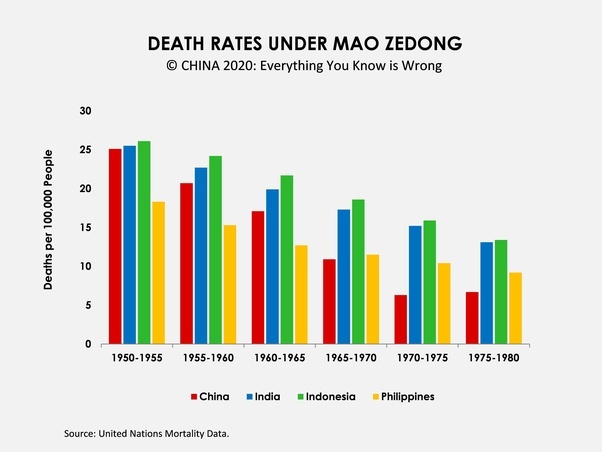
For Mao and China, there are official UN figures showing that Mao’s 28 calendar years of rule caused an unexpectedly fast improvement in Chinese life expectancy. The Three Bad Years were a blip in which deaths rose to what was normal at the time for poor countries.
In her 2025 book Fly, Wild Swans, Chinese-British author Juan Chang repeats her claim about the tough times from her biography of Mao, saying on page 11, “some forty million people died of starvation”. Denying there was dangerous weather – I detail later the overwhelming evidence that there was. And from her account of wider events, you’d never guess that the world’s strongest superpower treated the actual government of China as illicit until the early 1970s. Could have launched a massive invasion fronted by the Taiwan regime, which kept promising it.
“1958: “During the Second Taiwan Strait Crisis, Chiang again publicly emphasized the goal of retaking the mainland amid artillery battles over offshore islands.
“1961: “He formally launched the “National Glory” (Guoguang) plan, a serious (though ultimately unrealized) military preparation aimed at invading the mainland.
“1966: “At the start of the Cultural Revolution in mainland China, he renewed rhetoric that chaos on the mainland presented an opportunity for ROC recovery.
“Early 1970s (especially 1971): “Before the ROC lost its United Nations seat in 1971, Chiang continued to assert that his government remained the legitimate ruler of all China and would eventually return to the mainland.” (ChatGPT)
The Taiwan regime never had the strength to do it alone, and even Chinese critics of Mao seldom wanted the Kuomintang back. But since it was the legitimate government in US eyes, they could have sent in military forces to support it. The U.S. sent over 20,000 troops to the Dominican Republic in 1965 to give victory to their side in a civil war. And in 1954 in Guatemala, the possibility of US troops intervening must have helped the successful CIA coup against a moderate and elected left-wing government.
It is interesting to note that Nixon reversed a lifetime of anti-Communism and made peace with ‘Red China’, only after he had concluded that the Vietnam War was unwinnable. The anti-Communists in Vietnam had often come from what had become North Vietnam, and some dreamt of turning round the war and retaking the north. But in fact they crumbled, and Nixon must have known that the best he could hope for was a weak South Vietnamese regime holding part of the country. So since it was definite that China was going to stay Communist, it was sensible to see if it could be used to balance what was in the 1970s a strong and expanding Soviet Bloc.
It is likely that most Westerners are simply unaware of this, and Western books claiming to Tell All about China seldom do anything to correct this. It would be worthwhile getting some trustedly neutral agency to do a survey to check this. Let people guess the date of Beijing getting the Chinese seat at the UN, ranging from 1952 when it was definitely overdue to 1971, when it actually happened. And that was with the USA still voting against, though no longer strong-arming neutrals for that particular vote.
There was wildly exaggerated talk at the time about what China was suffering. Reporters from Japan and many NATO countries were in China and noticed only rationing, with officials doing the unprecedented for China and limiting themselves rather than feasting during famine. But lies from seemingly respectable US sources may have been believed:
“Project National Glory (1961–1966): Following the ‘Great Leap Forward’ famine, Chiang initiated this massive, secret, and ultimately failed, military operation in 1961, with planning continuing until 1966, to plan an invasion.
“Diminishing Hope: While the formal policy of military reconquest was effectively abandoned around 1966, the rhetorical commitment continued until his death in 1975.” (Ai Overview.)
As I said, where are the photographs of the famine that almost all Western sources keep insisting had happened under Mao? It isn’t something that can be hidden. Humans and indeed all other mammals are programmed by Natural Selection to live through a food shortage, with the hope of recovering and breeding in better times. And they do it in a very graphic and obvious manner, provided they have enough food to avoid immediate death. First, any surplus fat is shed, though most wild animals have little. Then the muscles are downsized, making the hungry person look like a living skeleton. For most, it is only at the end of this highly visible process does death occur. A human can die quickly from lack of water, shortage of food always takes time.
There are plenty of pictures from famines in Africa and India from the 1950s and 1960s, as well as intentionally-underfed prisoners of the Nazi camps. This is also true of Chinese famines before World War Two. ChatGPT summarises them:
Famine Years Estimated Deaths Photographed?
Northern Chinese Famine 1876–1879 9–13 million Yes
North China Famine 1920–1921 500,000+ Yes (extensive)
Famine of 1928–1930 1928–1930 3–6 million Yes
Sichuan Famine 1936 Hundreds of thousands Limited
North China Famine 1936–1937 Millions (varies) Yes
Henan Famine 1942–1943 1–3 million Yes (extensive)
AI Overview has extra details:
“1942–1943 Henan Famine: Occurred during the Second Sino-Japanese War. It was caused by drought, locusts, and heavy tax extraction by the Nationalist government, leading to 700,000–3 million deaths.”
In the crisis of 1959 to 1961, there was much tighter control. In real terms, it was the first time China had something equivalent to the governments of industrialised countries: a government that regulated and recorded all of its citizens, and also took responsibility. Imperial China had a central government that had theoretically absolute powers, but was content to just appoint governors for provinces and lesser officials for ‘Xians’, equivalent to an English County. The system relied on the magistrate collaborating with local elites, and it got worse when it was denounced by radicals who had no clear idea of an alternative. The warlords and then the Kuomintang fitted the old Chinese expression an ape dressed up as a philosopher-king.
( More strictly ‘the Duke of Zhou’, but he fits the concept of philosopher-kings publicised by Plato, and not actually realised anywhere in Europe. Confucius had a similar idea and may even be the indirect source. Plato was born 51 years after Confucius died, both civilisations keeping records of such things. Ideas may have been passed on among merchants in the grand chain of trading cities known as the Silk Road: there are always a few merchants with intellectual interests. It is notable that both Plato’s analogy of the soul as a charioteer is found in a much older Indian scripture; the Hindi Katha Upanishad, though it is possible that the specific story was borrowed and added later. The story of the blind men finding various parts of an elephant is not Plato, but got into Western philosophy rather later from Indian sources: probably the Buddhist Tittha Sutta. In the case of the Duke of Zhou, his wisdom and virtue are part of Chinese popular culture. But most Westerners would not know the essential difference between him and Zhu Bajie, ‘Pigsy’ in the Chinese legends of King Monkey. Philosopher-king comes closest.)
China at the time of the First Opium War had a culture that had been widely admired for many centuries, but unable to adjust. I’ve written elsewhere about why they failed while Japan succeeded: https://labouraffairsmagazine.com/problems-magazine-past-issues/traditional-china-resisted-modernisation/. I’d not say it could not have happened, but it is also sensible to suspect that it helped that Western powers took no interest in how Japan was governed. Western powers helped crush the religious communism of the Taiping, which included a much higher status for women. And then were neutral-to-hostile to later reformist movements, preferring corrupt leaders who would yield to the West’s immediate demands.
The Communists were in my view the only politically powerful body in China that had some idea of Western state power. Western in the Soviet variant, but to humans raised in most human societies in the past or outside of Europe, they would seem remarkably similar. Aldous Huxley in his 1932 SF novel Brave New World has Lenina Crowne, Polly Trotsky, Mustapha Mond, and Benito Hoover, referencing the Soviet Union, Ataturk’s Turkey, Mussolini’s Italy and pro-business mining engineer and President Herbert Hoover. Also Sarojini Engels, Morgana Rothschild, and Herbert Bakunin. Primo Mellon as a reference to a Spanish dictator and a American financier, both now almost forgotten. On top of all this Henry Ford, has been raised to divine status: there are two instance of people using the phrase ‘when Our Ford was still on Earth’, and a third ‘when Ford was on Earth’. This being is worshipped at ritual orgies that the man himself would surely have been offended by.
(Thanks to DeepSeek for the answer. ChatGPT was much inferior, and even flatly denied the existence of minor character Polly Trotsky. Huxley’s inclusion of Bakunin seems to me very odd, since he was a hold-out and the enemy of Marx with a rejection of any idea that there were positives in large-scale production replacing small self-management.)
Both Huxley and Wells saw similarities between Leninism, the dynamic force of US Big Business, and Mussolini’s brand of fascism. Nazism was something else, offending thinkers by driving out people like Albert Einstein for the crime of being Jewish. Mussolini had probably as many Jewish supporters as foes, before he double-crossed them to get closer to Hitler. But Huxley’s inclusion of Bakunin seems to me very odd, since he was a hold-out and the enemy of Marx with a rejection of any idea that there were positives in large-scale production replacing small self-management.
Mao made China a modern state, which was probably beyond the Kuomintang. They were lucky to inherit Taiwan, which Japan had been awarded after a war in 1895 and where they had imposed their own authoritarian modernisation. And of course China under Mao had strict control. But as I said, it was full of independent reporters, many from countries and newspapers unfriendly to Mao. Visible starvation could have been photographed, or if prevented we would certainly have been made aware of it. Yet no one has ever mentioned such a thing. And none of Mao’s critics seem to have noticed the lack.
Having found that the AI systems could pull together data very nicely, I tried getting hard data on how bad the Three Bad Years actually were. And got the following answers:
| Year | Estimated Total (ChatGPT) | Excess over 7 million | Estimated Total (AI Overview, low estimate) | Excess over 12 million |
| 1955 | 7,547,902 | 12,000,000 | ||
| 1956 | 7,162,426 | 12,000,000 | ||
| 1957 | 6,982,556 | 11,000,000 | ||
| 1958 | 7,906,117 | 906,117 | 14,000,000 | 2,000,000 |
| 1959 | 9,805,487 | 2,805,487 | 18,000,000 | 6,000,000 |
| 1960 | 16,836,440 | 9,836,440 | 25,000,000 | 13,000,000 |
| 1961 | 9,437,609 | 2,437,609 | 15,000,000 | 3,000,000 |
| 1962 | 6,783,386 | 10,000,000 | ||
| 1963 | 6,986,372 | 10,000,000 | ||
| 15,985,653 | 24,000,000 | |||
DeepSeek gave me two alternative sets of figures for deaths per thousand, but would not give actual deaths. So I asked it to calculate if one assumed a constant population of 667 million, which is an approximation to Angus Madison’s figure for 1960. Once again, the figures suggested a much smaller setback than the one that is usually quoted.
| Year | Deaths per 1,000 (Source 1) | Calculated Deaths (Source 1) | Excess over 7.5 million | Deaths per 1,000 (Source 2) | Calculated Deaths (Source 2) | Excess over 12 million |
| 1955 | 12.28 | 8,190,760 | 20.19 | 13,466,730 | ||
| 1956 | 11.4 | 7,603,800 | 19.4 | 12,939,800 | ||
| 1957 | 10.8 | 7,203,600 | 18.99 | 12,666,330 | ||
| 1958 | 11.98 | 7,990,660 | 490,660 | 18.24 | 12,166,080 | 166,080 |
| 1959 | 14.59 | 9,731,530 | 2,231,530 | 24.83 | 16,561,610 | 4,561,610 |
| 1960 | 25.43 | 16,961,810 | 9,461,810 | 29.99 | 20,003,330 | 8,003,330 |
| 1961 | 14.24 | 9,498,080 | 1,998,080 | 22.22 | 14,820,740 | 2,820,740 |
| 1962 | 10.02 | 6,683,340 | 15.64 | 10,431,880 | ||
| 1963 | 10.04 | 6,696,680 | 16.14 | 10,765,380 | ||
| 14,182,080 | 15,551,760 | |||||
DeepSeek also said “Estimates for excess deaths during 1959-1961 vary, with academic sources suggesting figures like 25–30 million over expected levels”. Quite how those sources got these figures is not explained. But like the other AI systems, it follows rules with no understanding. It will not try to reconcile a contradiction, in the way humans sometimes do.
China Better Off Without Mao?
Mao’s error with the Great Leap Forward must be set against a series of successes. First he got rid of the landlords. They he persuaded the peasantry to live collectively in groups of households, and then in whole villages. All of these succeeded.
Mao with no errors is an abstraction that would obviously be preferable to Mao as he actually was. But how does he compare to the realistic alternatives?
“Between 1927 and 1937 (the Nanjing Decade), the crude death rate in China is generally estimated at about 25–30 deaths per 1,000 people per year.
“Context
“This period followed the Northern Expedition and preceded the full outbreak of the Second Sino-Japanese War (1937).
“Mortality remained high due to:
- “Widespread rural poverty
- “Periodic famine and flooding (notably the 1931 floods)
- “Ongoing internal conflicts and warlord fighting
“Trend
“Scholars generally believe:
- “The death rate was gradually declining compared to the late Qing and early Republican eras.
- “Life expectancy during this period was roughly 30–35 years.
- “Major improvements in public health were still limited to urban areas.
- “Precise figures are difficult because nationwide vital registration systems did not yet exist, so estimates are reconstructed from local surveys and later demographic modeling.” (ChatGPT.)
I mentioned earlier that India is the sensible comparison. Taiwan had a lower death rate, but Taiwan had been reshaped by the autocratic but highly efficient Japanese Empire. For the Republic of India, the average was much worse:
“• Early 1950s: Around 25–27 per 1,000 (e.g., higher in the immediate post-1950 period due to lingering effects of famine, disease, and recovery).
- “• 1960: ~19–22 per 1,000 (World Bank/UN estimates show ~22.18 in 1960, declining thereafter).
- “• 1970: ~17 per 1,000.
- “• 1976: ~15.18 per 1,000.” (Grok)
For the whole period of Mao’s rule, 1949 to 1976, there were tens of millions less deaths than had someone else ruled and taken the cautious pluralist Indian approach,
It is also reasonable to suspect that without Red China there as a grand Asian challenge, India and the rest of Asia would have been treated worse. The USA feared losing the rest of the world’s largest continent, and so spent money on things other than weapons. I already knew this, but with no book handy I looked to Grok, which confirmed it:
“Yes, the United States provided extensive support—including funding, technical assistance, advice, and direct involvement—for land reforms in several Asian countries during the 1950s (and extending from the late 1940s).This was primarily driven by Cold War strategy: to counter communist influence in rural areas (where communists often promised land redistribution to peasants), stabilize U.S. allies, promote economic development, and prevent insurgencies. The U.S. viewed land reform as a way to create a class of independent owner-farmers, reduce rural inequality, and build political support for non-communist governments.
“Key examples include:
“Japan (late 1940s, under U.S. occupation): The Supreme Commander for the Allied Powers (SCAP), led by General Douglas MacArthur, implemented one of the most successful land reforms. Absentee landlords were forced to sell land at low prices to tenants. U.S. officials, including agrarian expert Wolf Ladejinsky, played a central role in designing and pushing this through. It dramatically reduced tenancy and empowered small farmers.
“Taiwan (1950s): The Sino-American Joint Commission on Rural Reconstruction (JCRR), established in 1948 and funded by U.S. aid (under the China Aid Act and subsequent programs), oversaw a multi-phase “land-to-the-tiller” reform. This included rent reductions (to 37.5% of yield), sale of public lands (much of it former Japanese-owned), and redistribution from landlords to tenants. Taiwan received over $1.5 billion in U.S. aid from 1951–1965, with $250 million directed to agriculture. American advisors, including Ladejinsky, were heavily involved, and the program is often credited with boosting productivity and supporting Taiwan’s economic miracle.
“South Korea (late 1940s–1950s): Under U.S. military occupation (USAMGIK) initially, and with ongoing U.S. pressure and aid, South Korea carried out land reform limiting holdings and redistributing land. The U.S. pushed this to counter North Korea’s communist reforms and stabilize the South. American aid was massive in the 1950s (at times funding much of the government budget), supporting implementation.
“The U.S. also promoted or funded similar efforts in other areas, such as South Vietnam (though less successful in the 1950s, with later “Land to the Tiller” programs in the 1970s heavily U.S.-backed) and parts of Southeast Asia.” (Grok)
The US government didn’t do it out of the goodness of their hearts. Individual idealists were involved, but Presidents and Congress allowed it as part of the vast overall spending during the Cold War.
The lack of functional goodness was shown when the Cold War was unexpectedly won in 1989-91:
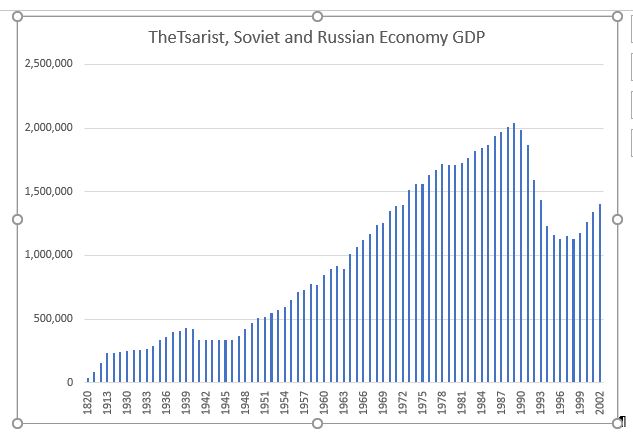
“The Russian Mortality Crisis refers to the sharp and sustained rise in deaths in Russia (and other former Soviet republics) during the late 1980s and especially the 1990s, following the collapse of the Soviet Union in 1991…
“The Russian Mortality Crisis refers to the sharp and sustained rise in deaths in Russia (and other former Soviet republics) during the late 1980s and especially the 1990s, following the collapse of the Soviet Union in 1991…
“The crisis peaked around 1994–1995, improved slightly in the late 1990s, worsened again around the 1998 financial crash, and began more sustained recovery in the mid-2000s…
“5 million excess deaths (1992–2001) compared to what would have been expected if late-Soviet mortality trends had continued” (ChatGPT.)
This and the equally drastic economic shrinkage gets ignored when the Western media asks why Putin is so popular. He is popular because he cleaned up a mess made by Yeltsin, who had trusted Western advice.
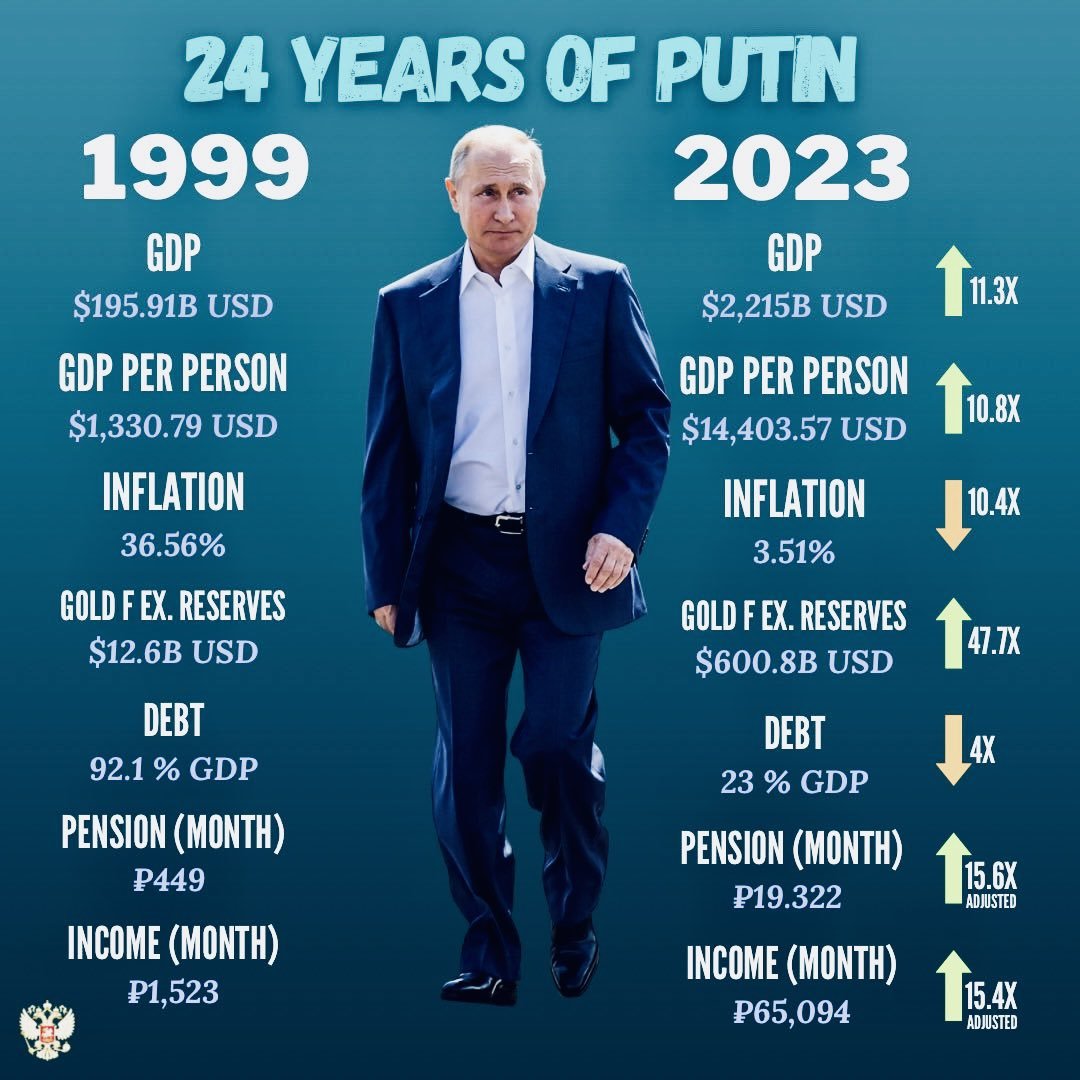
I also asked about Ukraine, which keeps electing leaders who want to blame Russia and do whatever the West asks of them:
“Roughly 3 to 4 million excess deaths occurred in Ukraine between about 1992 and 2013.
“This compares actual deaths to a counterfactual scenario where late-Soviet mortality rates (1980–1990) had continued.” (ChatGPT.)
And just as bad as Russia, but with much less of a recovery of the sort Putin managed:
“The economy of Ukraine shrank dramatically after 1991, and by 2014 it had still not fully returned to its late-Soviet level…
“1991–1999: Severe Collapse
“After the breakup of the Soviet Union in 1991:
“Ukraine’s GDP fell by about 40–60% (depending on measurement method).
“Industrial output collapsed.
“Hyperinflation in 1993 exceeded 10,000%.
“Real wages and savings were largely wiped out.
“This was one of the deepest peacetime economic contractions ever recorded outside of war.” (ChatGPT.)
Leftists, and not only leftists, are very ready to accuse governments of whipping up nationalism to divert from economic failure. But in the case of Ukraine, they see the 2014 riot against an elected President as Glorious Liberation. And prefer to forget about substantial numbers of Russian-speaking people in the south and east thinking after 2014 that they’d be better off being Russian.
Crimeans had been officially Russian till 1954. Brezhnev was born in what was then the province of New Russia, separate from the strongly Ukrainian regions that were insultingly known as the province of Little Russia.

It had not been part of the Kievan Rus that Ukrainian nationalists look back to. A block of small states whose northern members conquered territory to the east and created the modern Russian identity.
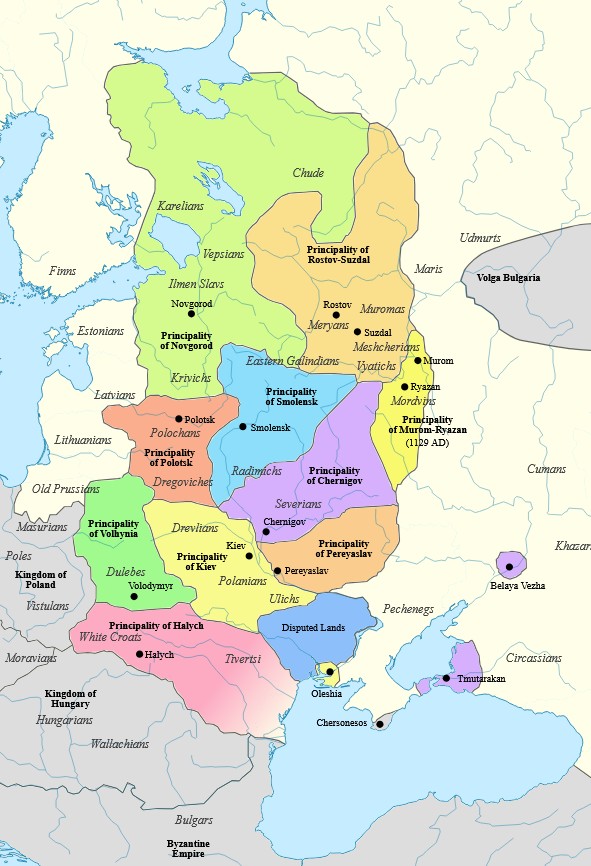
Had Soviet Ukraine gained independence as two separate states of West Ukraine and East Ukraine, a lot of later sorrow might have been avoided. Czechoslovakia sensibly separated into Czech and Slovak halves, with Slovaks mostly less hostile to Russia. But Yeltsin chose to simply remove the Soviet Union and let the fifteen Union Republics become sovereign states, with no thought of sensible adjustments or security for minorities. And Western advice on the matter was a mix of malice and incompetence.
A modest USA managed in the 1950s and 1960s to limit the march of Global Communism. And Nixon in the early 1970s recognised Mao’s China as strong and successful. But the unexpected Soviet collapse in 1989-1991 led most Western politicians to a long run of arrogance and failure.
Why the USA Resented Mao’s Success
Back in 2007, there were no semi-intelligent software engines that could do in seconds what might take a human weeks of access to the small number of public libraries that have almost everything ever published in English. Or other languages if you are fluent in them, which I am not. But in 2007 I was able to put together a refutation of talk about a Great Leap Famine. And saw it as part of the general US desire to make the rest of the world an inferior copy of US values.
“Up until 1949, the USA saw China as a vast mass of human raw material that could be educated, modernised, Christianised and turned into passable imitations of US citizens. There was a genuine fondness for Chinese, but this fondness assumed superiority. Chinese culture was ‘cute’ but it was Western values that mattered.
“US citizens who got a good look at pre-Mao China knew it wasn’t that simple. The Kuomintang were called Nationalists, but if they were functional Nationalists then I’m an astronaut. Chiang Kai-Shek might have liked to have been China’s Ataturk, but he wasn’t up to it…
“To the USA, the 1949 revolution meant that the Chinks were getting uppity, even out-fighting the USA in the Korean War.” (https://labouraffairsmagazine.com/m-articles-by-topic/m99-topic-menus-from-long-revolution-website/42-china/china-three-bitter-years-1959-to-1961/
Someone should document anti-Chinese racism in the USA, caused by workers hating the cheap skilled labour the rich had imported into California. Continuing into the Covid-19 era and Trump’s efforts. Yankee Doodle Hated Uppity ‘Chinks’ would be a suitable title. I have other tasks, and am just limiting myself to an expanded version of my previous comments. Which have aged well:
“The USA was deeply offended by the existence and success of People China, keeping it out of the United Nations until the 1970s, when Nixon realised that US interests were served better by using China as a counter-weight to the Soviet Union. Before then, all sorts of bizarre stories circulated. Most of the stories were simply untrue and have been swept into the dustbin of history. Regarding the ‘Three Bitter Years’ – 1959 to 1961 – there was some relationship between US propaganda and reality. It was undoubtedly the worst crisis of Mao’s two-and-a-half decades of supreme power…
“The USA was deeply offended by the existence and success of People China, keeping it out of the United Nations until the 1970s, when Nixon realised that US interests were served better by using China as a counter-weight to the Soviet Union. Before then, all sorts of bizarre stories circulated. Most of the stories were simply untrue and have been swept into the dustbin of history. Regarding the ‘Three Bitter Years’ – 1959 to 1961 – there was some relationship between US propaganda and reality. It was undoubtedly the worst crisis of Mao’s two-and-a-half decades of supreme power.
“Up to 1956, Chinese Communists generally saw themselves as the Chinese branch of a global movement that would in due course produce a world socialist state. In reaction to Khrushchev’s rejection of Stalin, Chinese Communism decided to go its own way…
“It’s not common to think about China and Spain in parallel, but it may be productive. I started doing so quite accidentally: I had kept a close watch on China from the 1960s till the 1980s, when I assumed it had failed and was selling out. I’d been hopeful for the Tiananmen protestors of 1989 and had noted that they included people who cherished Mao’s memory as well as some who wanted to do what Russia and Eastern Europe went ahead and did. Events in the 1990s showed that a lot of what I thought I knew was seriously wrong. Also that the road to truth was the direct opposite to what the triumphant New Right were now saying.” (Ibid.)
I wrote that in 2007, and wasn’t expecting the spectacular financial crisis in 2008. And was depressed but not hugely surprised that the public in the USA and UK let governments pick up the gambling debts of the very rich. When they made 90% of the public pay the costs with austerity. And it is 90% rather than 99% or the entire population except a few billionaires. The biggest gainers are certainly the billionaires, but there are little more than 3000 of them. Several million multi-millionaires, the 1%, are also doing better than if the New Right had never emerged in the 1980s. And a comfortably ‘Next Nine’ are not suffering, with some hoping to rise into the 1%. Failing to see this has been a problem for most of the left, but much worse is that they fear state power and are suspicious of trying to use it for good ends. Heroic individual actions will at best supplement reforms to the existing system.
Belief that Mao mysteriously wasted the energies of the Chinese people is one element in the mistrust of state power. So is belief that the Soviet Union under Stalin wasted a glorious prospect in Spain. There, I looked into it after some unfair remarks made by a former leftist about my father’s views of Orwell. I ended up decided my father was actually much too soft on the man. (https://labouraffairsmagazine.com/m-articles-by-topic/m99-topic-menus-from-long-revolution-website/44-fascism-and-world-war-2/45-1-more-on-fascism-the-world-wars/491-2/.) But I also realised that the West had put an utterly different spin on two rather similar patterns of a population thinking very radically:
“Orwell was nominally giving ‘homage’ … in Homage To Catalonia. He was less than frank about the degree to which it was an anarcho-communist experiment, a possible alternative society that most of his readers would have found much more alien than Stalin’s Russia. I got details about the last flowering of European anarchism from various sources, and was struck by the similarities to some of the stuff Mao had done.” (https://labouraffairsmagazine.com/m-articles-by-topic/m99-topic-menus-from-long-revolution-website/42-china/china-three-bitter-years-1959-to-1961/)
The big difference was that the Catalonian radicals were crushed by a Republican government supported by the Soviet Union, whereas the Cultural Revolution was rejected by a Chinese government that the West mistakenly saw as surrendering to their values. Tweedledee is a hero and Tweedledum is a villain, and only a bad person would dare see anything similar.
I’m sure they class me as a bad person, if they notice me at all. I have never let it upset me. I’ve been making monthly comments from the 1980s, and you can check my opinions against reality if you have the time. Try https://labouraffairsmagazine.com/monthly-comments-on-politics-from-the-1990s-till-now/.
In 2007 I said:
“I had nothing to apologise for in the 1990s. I’d been seeing Soviet behaviour as increasingly bad from their 1968 crushing of Democratic Socialism in Czechoslovakia. A Soviet collapse then or in the early 1970s would have left socialism as the common framework, and the Thatcher / Reagan option might never have been heard of. In the 1990s, I saw many of the people who had praised Brezhnev when he was riding high go realigning themselves with the surviving Superpower.” (Ibid.)
I might also have mentioned Hungary, but Hungary had been a willing ally of Nazi Germany in World War Two. And I was still a child and only noticed it later. And it was not inherently fatal in the way the system lost all justification by invading pro-Soviet Czechoslovakia, the first victim of Nazism if you count Austria as a willing partner.
Regardless, I was not lost when Moscow ‘lost the plot’. Feeling positive about China in general, I read a lot more about China and felt the need to counter the stories about Mao killing millions. And easily found evidence that his ambitious plans to reorganise Chinese agriculture were hit by a major weather crisis:
“Back in the 1950s, the phenomenon now known as ‘El Nino’ was unknown and unsuspected. Its typical result in China would be drought in the north and floods in the south. But the connection was not simple, occurring after the main cycle and sometimes not at all. There definitely was abnormal weather. In July of 1959, the Yellow River flooded in East China. According to the Disaster Center, this killed about 2 million people. In 1960, at least some degree of drought and other bad weather affected 55 percent of cultivated land , while an estimated 60% of agricultural land received no rain at all. The Encyclopædia Britannica yearbooks from 1958 to 1962 also reported abnormal weather, followed by droughts and floods. This included 30 inches of rain in Hong Kong across five days in June 1959, part of a pattern that hit all of Southern China.
“If Chinese officials nowadays say that there was no bad weather in the ‘Three Bitter Years’, this shows only that Chinese officials nowadays are no more truthful than they were under Mao, or under the Kuomintang, or in the former Chinese Empire.” (Ibid.)
The official line also became more pro-Mao when Hu Jintao succeeded Jiang Zemin in 2002, something I did not properly appreciate in 2997. And even more so when Xi Jinping took over in 2012. But both are also political heirs to the leaders who were against the Great Leap Forward at the time. They would probably not wish to find excuses for it.
I am an outsider, wishing just to convince Westerners that Mao was a success, not a monster. So I can note how the events of 1959-1961 were a setback that interrupted a run of spectacular success:
“If we believe the figures released after Mao’s death, there was a sudden ‘spike’ in the death-rate, which had fallen from 21 per thousand per year when Mao took over to a low of 7 per thousand when he died. [H] The net effect of Mao’s rule was that hundreds of millions of people lived longer and had a much better life than they had had under Kuomintang rule. A somewhat better and longer life than was the norm over the same years in the Republic of India, the world’s biggest Western-style democracy and now recognised as an economic success story…
“China in 1959-1961 had an efficient system of rationing. In a typical peasant society, famine visibly hits the poor, who waste away to ‘living skeletons’ and then die. This didn’t happen under Mao: everyone got enough food to survive, and observers who had seen conventional famines concluded that there was no famine. Hunger and stress will raise the death rate, obviously, but that will be much less obvious to an outsider. Whether you class this as a famine is a matter of definitions.
“Beijing could have coped better, obviously. But this was a relatively new and inexperienced government. It also faced something outside of its previous experience: massive false reporting within its own power-structure. Local officials reported increased crops when in fact they had grown much less. Controls were bad and the central government thought it had much more grain than actually existed. Only gradually did they realise how bad the situation was.
“China also exported rice, but this rice was used to purchase cheaper grain, meaning that China was a large net importer of food. The USA, still angry at those ‘uppity Chinks’, did its best to stop this. But Canada and Australia were more interested in looking after their own farmers than pleasing the USA.” (Ibid.)
Bad Weather Confirmed from Western Sources
In 2007, there were no software engines that could collect data from multiple sources and assemble it into a mostly-decent account. Now we have them, and as I said, they can do in seconds what might take a human weeks of access to the small number of public libraries. They are also hopeless at making decisions about issues without human guidance, but I was not going to trust them for that.
What I got confirmed what I’d been expecting:
“”The early 1960s (including the Great Leap Forward era, ~1958–1962) saw severe droughts in parts of northern China, contributing to the Great Chinese Famine. Some reports mention extreme low flows or partial drying in tributaries/regional streams, and one older account (from a 1960s-era TIME article) notes that for 40 days the lower Yellow River was “dried up almost completely” during a drought period in that timeframe.” (Grok)
“Was there flooding and excessive rain in South China around 1960?
“”Yes, there was flooding and excessive rain in parts of South China around 1960, though it was not uniformly excessive across the entire southern region, and the dominant narrative for the period (1959–1961) emphasizes a mix of droughts and floods rather than widespread, prolonged excessive rain as the primary weather driver…
“ Flooding and heavy rain events did occur in some southern and central areas. For example:
“ In 1959, the Yellow River flood (though more northern/central) was severe, but southern/coastal provinces faced typhoons and related heavy rains/flooding.
“ Accounts describe floods in southern regions, including excessive rain contributing to crop damage in rice paddies and other areas.
“ Some sources note heavy rains and floods in parts of the south, exacerbating issues amid the famine, with typhoons hitting southern/coastal provinces multiple times (e.g., 11 major typhoons noted in some records for the period).
“ However, the overall weather pattern during 1959–1961 was not characterized by excessive rain nationwide or predominantly in the south:
“ The period is more commonly associated with severe droughts (especially in 1960, described as one of the worst in the 20th century in some areas), prolonged dry spells, and uneven precipitation.” (Grok)
I got a broader picture from AI Overview:
“Yes, China experienced significant bad weather between 1959 and 1961, which the Chinese Communist Party (CCP) historically labeled the ‘Three Years of Natural Disasters’
“While bad weather—including droughts, floods, and typhoons—was a contributing factor, most historians and researchers agree that the overwhelming cause of the famine was human error and failed, radical government policies, specifically the Great Leap Forward.
“Weather Events (1959–1961)
- “ 1959: Severe flooding occurred along the Yellow River, and typhoons impacted southern/coastal areas.
- “ 1960: Considered the worst year of weather, affecting 55-60% of cultivated land with drought. Northern provinces experienced months of drought, while the south suffered flooding.
- “ 1961: Continued severe weather with ongoing droughts in the north and floods in the south.
- “ Locust Plague: A significant, secondary effect of the ‘Four Pests’ campaign (which eliminated sparrows, the natural predator of locusts) caused massive damage to crops.
“The Role of Policy vs. Weather
“While the government at the time heavily emphasized natural disasters, independent meteorological data suggests that weather, while unfavorable, was not historically unprecedented. The famine was largely a ‘man-made’ catastrophe caused by the following policies:
“ Diversion of Labor: Millions of peasants were pulled away from farming to produce ‘backyard’ steel, leaving crops to rot in the fields.
“ Communal Kitchens: The establishment of communes led to rapid consumption of food reserves.
“ False Reporting: Local officials, under pressure to report high quotas, inflated production figures. Consequently, the state procured too much grain, leaving farmers with nothing to eat.
“ Exporting Grain: Despite the developing famine, China continued to export substantial amounts of grain to the Soviet Union and other countries to maintain appearances.
“Conclusion on Impact
“Historians generally agree that while bad weather reduced grain output, the resulting famine and death toll (estimated between 15 and 55 million) were mainly due to government mismanagement. Former Chinese leader Liu Shaoqi, in 1962, described the situation as 30% natural disaster and 70% human error’”
It happened after a series of successes. Mao had needed to encourage officials to carry through a drastic land reform, and then was able to persuade most of the peasants to go along with collectivisation at the level of the village. This and a widespread policy of free health care had extended lives:
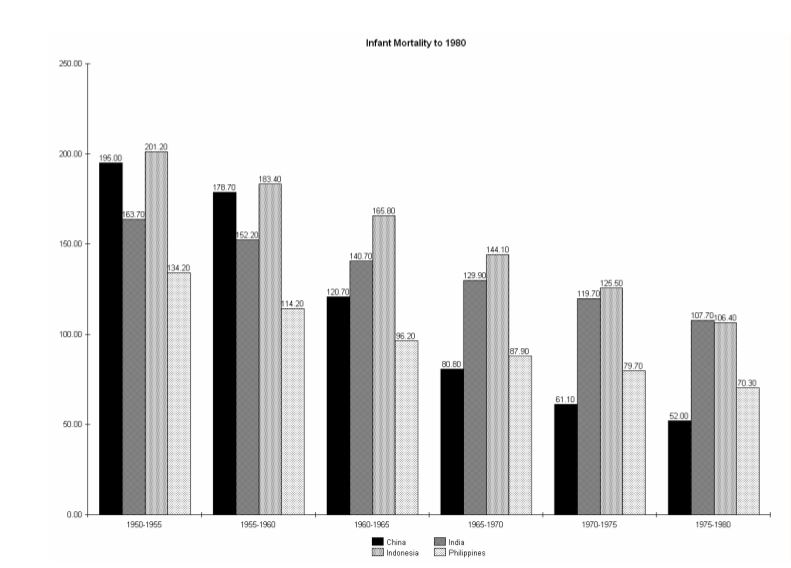
One must also ask, is it fair to compare mass deaths before 1949 to an excess of deaths under Mao? As I mentioned, there was no modern state to keep tract of such things:
“There is no continuous, high-quality national vital registration system for China before 1949. What we have are reconstructions from local gazetteers, missionary records, customs data, and later demographic back-projections…
“Historical demographers (notably Judith Banister and later Chinese scholars) reconstruct national crude death rates (CDR) roughly as:
- “Late 19th century: ~30–40 deaths per 1,000 per year
- “Early 20th century (1900–1937): typically ~25–35 per 1,000
- “Wartime spikes (e.g., 1937–1945): substantially higher in affected region…
“China after 1949 quickly fell below 20 per 1,000 by the mid-1950s (before the Great Leap famine spike).” (ChatGPT),
The tens of millions in older Chinese records would be of those who had clearly died of hunger. There would be no evidence if the wider population who had less food and more stress died at a higher rate than normal. And the best estimate suggest that even a normal year would be worse than Mao’s worst year, 25 per thousand,
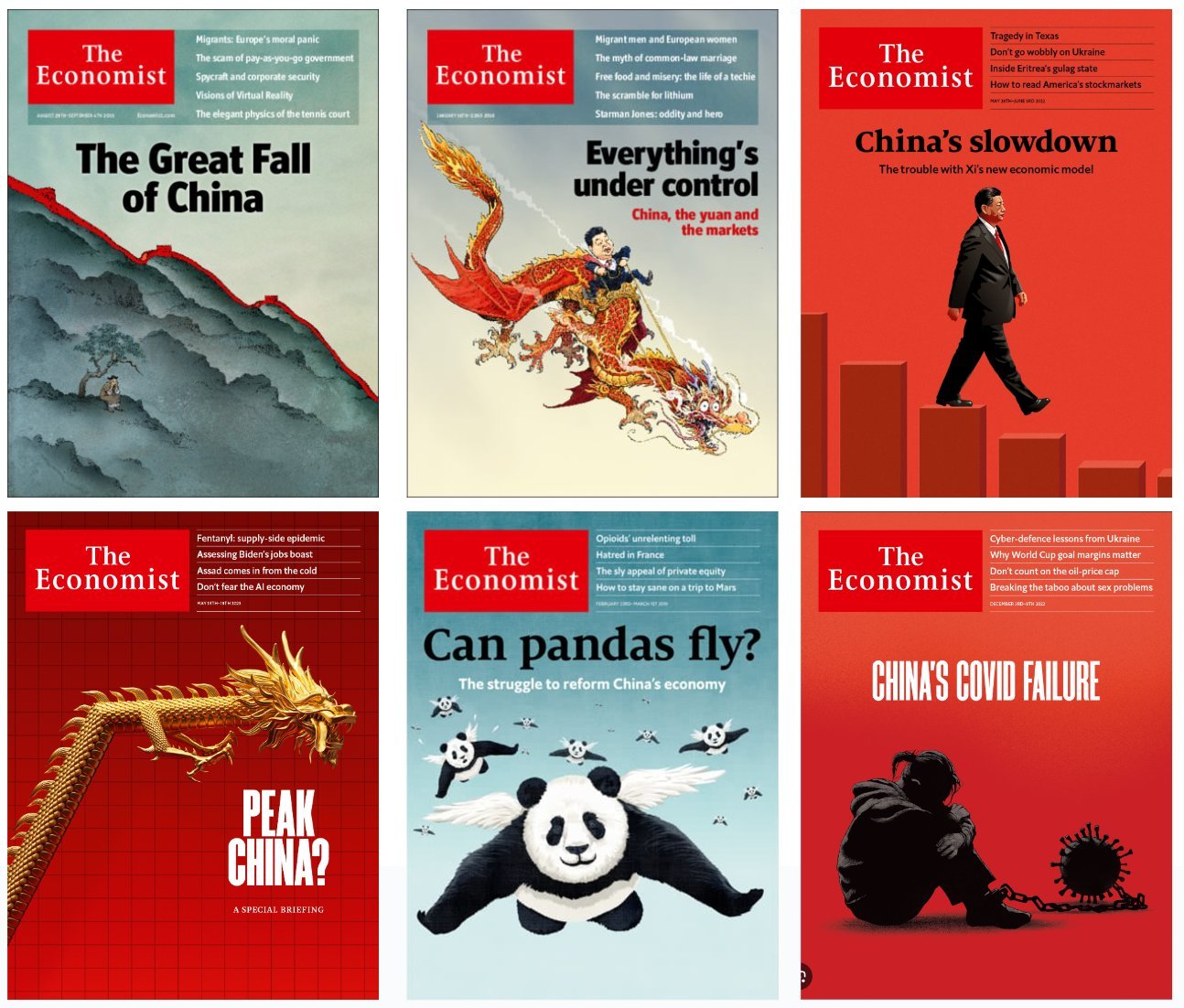
Also note that a willingness to blame Mao is from the same well-paid ‘experts’ who started predicting Chinese failure after they failed to collapse when most of the pro-Moscow regimes did so.
“Western experts and commentators have been predicting an impending economic ‘collapse’ or disaster for China’s economy repeatedly for decades, with many forecasts claiming that China’s growth could falter or fail within a few years. One of the most noted cases was:
“The Coming Collapse of China, published in 2001, in which Gordon G. Chang argued that China’s political and economic system was unstable and would lead to collapse by around 2011 — a prediction he later revised unsuccessfully toward 2012.
“That example is often cited as emblematic of a broader pattern in which Western analysts periodically forecast near-term disaster for China’s economy, even as it continued to grow robustly. Some other commentators have repeatedly predicted stagnation, deflation, demographic crisis, or structural decline in various media and reports over the years, despite these forecasts not materialising as predicted yet.
“So from 1989 until today (2026) — a period of about 35 years — there has been a recurring theme in Western commentary that China’s economy would soon suffer severe collapse or disaster in the ‘next few years,’ even though those predictions have repeatedly been pushed forward as time passed.” (ChatGPT)
Bold Policies Justified?
Western books and media from the 1980 almost always present as a series of blunders. They ignore that he freed Chinese agriculture from a type of landlordism that was entirely parasitic. Mao in one of his studies of regional conditions notes that there were no improving landlords: no one using their wealth to make agriculture more productive.
It also gets omitted that Mao was able to collectivised land peacefully, working by stages. First Mutual Aid Teams of 5 to 10 households), with land still privately owned. Then when this was familiar, they were encouraged to form successively larger Agricultural Producers’ Cooperatives, which mostly corresponded to a traditional village. All of them worked well, with a growing population producing more food than ever before.
This was the context of the Great Leap Forward, which was also quite popular. Cooperatives were merged into massive People’s Communes that contained thousands of households. Communal kitchens replaced family cooking. But people got over-optimistic. There was a lot of false reporting, based on a belief that others were succeeding and they could bluff it till things got better.
It was a bubble, probably the first in China and so not easy to recognise. And it coincided with genuine bad weather. But the 25 per thousand deaths in the worst year does not mean mass starvation. Such a death rate would have been normal in China’s past, and remained normal for many years in much of the rest of the Global South.
And while there is no simple relationship between dying young and being disappointed, most of us accept that there is some relationship. Happy people die suddenly, and some wish for death yet live long, but mostly you improve
Note also that Deng Xiaoping’s ‘Household Responsibility System’ returned land-use rights to individual families, while keeping state ownership. This remains the case, and villagers who lost their jobs in factories can return and be given land to work. A much better system than in most of Asia, where you find bullying landlords and oppressed landless peasants.
Mao was over-bold in 1958, because he had managed a long run of being successfully bold. Successfully when he was given provisional command over the main force of China’s Red Army in 1935: his ascent to undisputed top authority in 1943 was much more gradual and conditional than most people realise. Many published books on China are muddled on this, just as they fail to realise that Yenan only became the capital of Communist China after Chiang Kai-shek was forced to make a coalition with the Communists and other anti-Japanese forces after being held at gunpoint by some of his warlord allies in the Xian Incident.
Mao up until 1949 was generally bold but moderate. Commonly opposing rival Chinese Communists who tried being militant beyond what could actually be done. Militancy that Mao was against had made the Long March necessary, after the Central Committee had to abandon their once-strong Shanghai underground and sidelined Mao and his cautious Mobile Warfare. And Mao was sensible, not questioning the right of the Central Committee majority in the way Trotsky did when he did not get his way. He waited and he came back by stages. His policies almost always worked, whereas Trotsky’s tradition has not a single positive achievements to show from its repeated claims to know better.
While calling for fast growth, his mid-1950s goals were realistic. In a 1955 speech he said
“Our goal is to catch up with and surpass the United States … As for how many decades it will take, depending on everyone’s efforts, it will take at least fifty years, perhaps seventy-five, which is fifteen five-year plans. Only when we catch up with and surpass the U.S. can we finally breathe easy.”
If you use purchasing power parity, the IMF reckoned this happened in 2014. Just under 60 years, and few would have believed it at the time.
Most Westerners now believe that this all happened after Deng dismantled Mao’s failed system. But at the time, visitors noticed that China was much richer than it had been. Still poor, but much less poor than most Chinese had been before 1949. Removing the rich hadn’t been the disaster that the New Right pretend.
I’ve also never yet seen any of the critics say that China did not grow under Mao – more Bliaring, with such views left to enthusiasts who don’t check facts. As I said earlier, Maddison’s much-respected data shows fast growth despite the Great Leap Forward setback. And summary services, best viewed as useful data collectors rather than sources of wisdom, tell the same story:
“‘During the 1950s and 1960s, China experienced highly volatile economic growth, characterized by rapid industrial expansion, catastrophic policy-induced downturns, and overall moderate average growth compared to its later reforms
- ““ 1950s Growth: The decade saw rapid, state-led growth, with an estimated average annual growth rate of approximately 8% to 9% during the First Five-Year Plan period (1952–1957). However, this ended with the beginning of the Great Leap Forward in 1958, which caused severe volatility.
- “ 1960s Growth: This period was marked by a deep economic crisis (1960–1962), a subsequent recovery (1963–1965), and another slowdown during the start of the Cultural Revolution (1966–1968). Growth was often volatile, with a record low of -27.30% in 1961 and a high of 21.30% in 1958.
- “ Average Rate: Taking the entire period from 1952–1977 into account, China’s real GDP grew at an average annual rate of roughly 6.14%, though this is considered highly volatile and often exaggerated by focusing on heavy industry over consumer goods.
“Key Economic Periods (1950s–1960s)
- “ First Five-Year Plan (1953–1957): Industrial output grew rapidly (18% annually), with GDP growing by 8.9% annually.
- “ Great Leap Forward (1958–1960): The economy experienced extreme, unsustainable, and often fictitious growth numbers before crashing.
- “ Economic Crisis (1960–1962): A massive nationwide famine led to a sharp contraction, with a, 27.3% drop in 1961.
- “ Recovery and Cultural Revolution (1963–1969): The economy recovered by 1965 but was disrupted again by the political turmoil of the Cultural Revolution.
“Factors Affecting Growth
- “ Industry vs. Agriculture: Industrial output grew rapidly (often over 10% in good years), but agricultural growth lagged, averaging only 4.5% during the first plan.
- “ Volatility: The growth pattern was ‘haphazard’ due to, central planning, political campaigns, and, the redirection of resources from agriculture to, inefficient, heavy industrial projects.
- “ Data Reliability: Economists often suggest that official statistics from this era may, be exaggerated or, not comparable to modern metrics, with some independent estimates for the late 1950s being 3 percentage points lower than official figures.’ (AI Overview)
“During the 1950s, China’s economy experienced significant growth due to postwar reconstruction and the implementation of the First Five-Year Plan (1953–1957), which focused on industrialization and agricultural collectivization.
“Key estimated annual growth rates for the decade were:
“- 1953–1957 (First Five-Year Plan period):
“ Industrial output grew by about 18% per year on average, while national income grew around 9% per year.
“- 1958–1960 (Great Leap Forward):
“ Initially reported very high growth (e.g., 21% in 1958), but these figures were later questioned due to statistical exaggerations and subsequent economic collapse in 1960–1961.” (DeepSeek),
“The 1960s averaged around 5–6% annually overall, but with extreme volatility: deep negative growth in 1961–1962 and 1967–1968, offset by high rebounds.
“Broader Context
“ From 1953–1978 (encompassing both decades), Chinese official statistics report average annual real GDP growth of ~6.7%, though some economists (e.g., Angus Maddison) estimate closer to 4–5% after adjustments for potential overstatement.” (Grok)
On this matter, you can easily be misled ff you check the Wiki, https://en.wikipedia.org/wiki/Economic_history_of_China_(1949%E2%80%93present). You’ll have trouble disentangling the positive achievement from complaints about mistakes. More Bliaring: a source that does its editing by consensus cannot easily cope when most people are biased.
The Wikipedia also added Tibet to a list of countries that had been annexed, even though annexation is clearly defined as a state claiming territory that it had never previously claimed. No sovereign state ever recognised an independent Tibet. (https://labouraffairsmagazine.com/m-articles-by-topic/42-china/tibet/tibet-and-international-law/.)
The widespread belief that China stagnated before Deng is another case of Mao being reinvented by the New Right. And most of the left weakly going along with it.
Moderate Socialism Secure on Maoist Foundations
Beijing continues to see Mao’s errors as a blemish on a career of massive successes.
Most Western leftists reject this, despite having had no recent successes to have blemishes on.
Most Chinese ignore them. They are content with a government that gives them a voice and a vote, but does not allow rival political organisations that seem to have no purpose than to disrupt what exists.
The Western approach of ‘smash it and hope for something better’ can’t be called a success for recent decades. Some states in the Global South have simply collapsed. Others have found stability by authoritarian rule, often with a revival of hard-line versions of traditional religions.
Back in the 1970s I was one of a minority on the left who wanted to use existing militancy to add more socialism to the existing Mixed Economy system. And we correctly feared that wasting peoples’ energies in struggles with no clear benefit would lead to something much worse. We hadn’t exactly expected Thatcherism, but we never supposed that it was anything like fascism.
We didn’t take Gorbachev’s muddled reforms very seriously. And when his foolishness unexpectedly collapsed the system, most us recognised that Yeltsin was doing all the wrong things with the power he had unexpectedly inherited. I myself was a bit slow on this, even though my earlier studies of Adam Smith told me that the New Right idea of capitalism was sheer nonsense.
You can find all this on our archive website, https://labouraffairsmagazine.com/m-articles-by-topic/.
At the time of the Tienanmen protests in 1989, I was still foolish enough to think that the West would be generous if Leninism collapsed. So I was disappointed that the protests collapsed. But Chang and Halliday’s silly book about Mao provoked me to study them in detail. (https://labouraffairsmagazine.com/m-articles-by-topic/42-china/42-1-chinese-politics/a-review-of-mao-the-unknown-story/.) Finding absurdities like pages of ‘references’ that offered dozens of alternative books and articles as a possibly source for one of their more doubtful claims, and some was very clearly wrong. And it also led me to study more and to realize that Deng had conceded much less to the West than most people believed at the time. The protestors would have wrecked China in the same way that similar incoherent enthusiasts caused immense suffering for post-Soviet Russia.
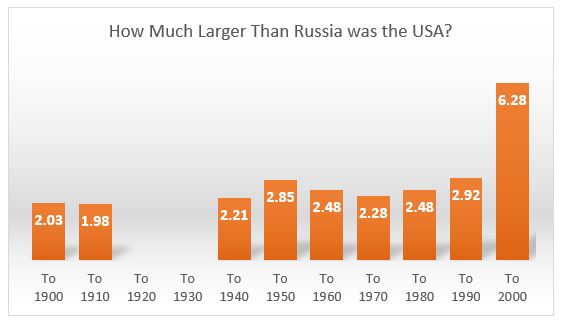
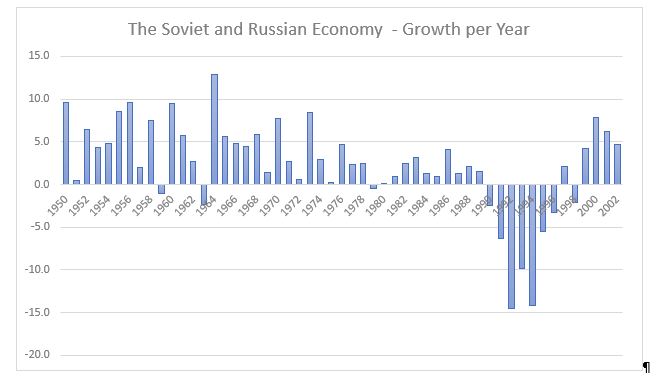
Multi-party democracy relies on the differences between the electable parties being small enough that no one thinks them worth dying for. That’s why it led to a series of wars in Ireland, when the entire United Kingdom became loosely democratic for while males in the 1880s. And likewise in the USA in the 1850s and 1860s, with a system loosely democratic from the 1830s exposing huge differences about what the Federal Government should do about slavery.
In Northern Ireland, the IRA had seemed a lost cause in the early 1960s. But when modest demands upset the political balance, it turned out that the two communities were still ready to die for two different visions of the future. An issue not yet resolved, but the Protestant majority are weakening from the damage done by Thatcher to the heavy industry that was the basis for their separate existence.
In China, virtually every member of the Han majority would reject the idea of Tibet being a separate sovereignty, which it had not been since before the creation of the USA (https://labouraffairsmagazine.com/past-issues/isolated-labour-affairs-pages-before-2015/how-tibet-emerged-within-the-wider-chinese-power-political-zone/). How many Tibetans would even want it remains uncertain: the exiles were slave-owners who rebelled in 1959 when the Central Government made it clear that slavery and serfdom must go eventually. And in Xinjiang, Western reports have talked nonsense about genocide, a story that began when the law was changed to remove the privileges that Uighurs and other minorities had enjoyed before the policy was relaxed for everyone. There are far more Uighurs in Xinjiang than have ever existed before, but they also overlap with many other ethnic groups. The basis of Beijing’s policies has been a violent separatist movement demanding a sovereign East Turkistan: the territory included Han and also non-Turkic minorities. The West at one time reported this accurately, but for the past decade or so has suppressed the awkward truths (https://mrgwydionmwilliams.quora.com/West-Reports-Only-Propaganda-on-Xinjiang).
The New Right thought they could bring peace to the world with their vision of Capitalism plus Multi-party democracy. It has in fact failed to bring peace anywhere from the 1980s, and brought war to many places. And a wholly new level of confrontation and conflict to the USA itself.
Chinese leaders have been proven correct in their confidence in their own system and continued respect for the legacy of Mao.
Wider Reading
Many more articles on-line, giving a new vision of socialism:
- Labour Affairs Archive: https://labouraffairs.com/
- Labour Affairs Magazine: https://labouraffairsmagazine.com/
- My Comments on the month’s politics, from 1991 and before: https://labouraffairsmagazine.com/my-monthly-politics-from-1991/.
- My blogs listed by topic: https://gwydionmadawc.com/my-blogs/
- The Ukraine war: https://gwydionmadawc.com/my-blogs/ukraine-the-current-conflict/
- A wider view at https://www.atholbooks.org/
- A brief account of who I am at https://gwydionmadawc.com/about/.
- My book on Adam Smith is available at http://www.atholbooks-sales.org/searches/authorsearch_begin.php.
- Being nearly 75 years old, I find I have more interesting ideas that I can ever write up myself. So I have also done a page of ideas that anyone is free to borrow. https://gwydionmadawc.com/ideas-you-might-borrow/2537-2/,
 Gwydion Madawc Williams